Mistakes Are Proof You Are Trying: A Mindset for Creative Execution
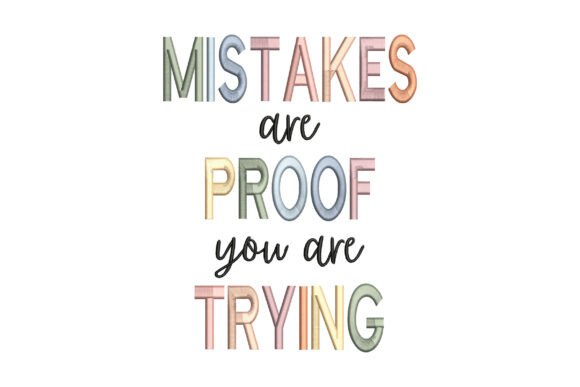
In the realm of creative production and business development, the fear of failure often acts as a more significant barrier than the lack of resources or skills. The concept that Mistakes Are Proof You Are Trying is not merely a motivational slogan; it is a functional framework for managing risk, iterating on designs, and maintaining momentum in a high-stakes environment. For professionals ranging from small business owners to freelance designers, adopting this perspective shifts the focus from perfectionism to progress. It transforms errors from stop signs into data points that guide refinement and improvement.
This mindset is particularly relevant when engaging in tangible creative processes, such as textile design and machine embroidery. When you decide to give your fabrics a stylish update with a new design, the initial attempts may not yield the expected results. Thread breaks, registration issues, or density problems are common. Viewing these setbacks through the lens of "Mistakes Are Proof You Are Trying" allows creators to troubleshoot effectively rather than abandoning the project. It encourages a workflow where experimentation is built into the planning phase, ensuring that the final product—whether a custom t-shirt, a set of towels, or home decor—is the result of intentional iteration.
Integrating the Mindset into Project Planning
The utility of the phrase Mistakes Are Proof You Are Trying begins before any physical work commences. In the planning stage, it serves as a permission structure for prototyping. When launching a new line of embroidered goods, the temptation is to order bulk materials immediately based on a digital preview. However, a process-oriented approach dictates a test run first. This involves selecting a scrap piece of fabric that mimics the texture and weight of the final material and running a single design sample.
If the test fails, the mistake is not a waste of time; it is an investment in quality control. It reveals whether the digitized file requires adjustments in stitch count, pull compensation, or underlay settings. By normalizing the expectation of initial imperfections, teams can allocate time and budget for these necessary trials without panic. This preparation ensures that when the actual production begins, the workflow is streamlined, and the likelihood of costly rework on finished inventory is significantly reduced.
Workflow Integration for Digital Assets
Modern creative workflows rely heavily on digital assets, specifically machine embroidery files. These files come in various formats, such as .PES, .DST, .JEF, and .EXP, each compatible with different brands of embroidery machines. The integration of the "mistake as proof" philosophy here involves testing file compatibility across multiple devices before committing to a large batch.
A professional might download a vibrant and imaginative embroidery design intended to add flair to a collection of tote bags. Before loading the commercial stock, they should test the file on their specific machine model. If the design appears distorted or the threads snag, the error highlights a need for file conversion or re-digitization. This step interacts directly with software tools and hardware capabilities. Understanding that a mismatch between file format and machine capability is a solvable problem, rather than a fatal flaw, keeps the project moving forward. It encourages the use of simulation software to preview stitches, further reducing the margin for error in the physical execution phase.
Execution and Real-Time Problem Solving
During the active production phase, the pressure to maintain consistency is high. Whether embellishing t-shirts for a pop-up shop or creating custom towels for a boutique hotel, the operator must manage tension, speed, and hoop placement. Mistakes inevitably occur during this stage. A thread break might happen due to humidity, or a hoop might shift slightly, causing a misalignment in the pattern.
Applying the principle that mistakes indicate active engagement helps operators remain calm and analytical. Instead of stopping the entire line out of frustration, the operator pauses to diagnose the specific cause. Was the needle dull? Is the stabilizer insufficient for the fabric type? This diagnostic process is where true skill is honed. Each error provides immediate feedback on the interaction between the machine, the material, and the design parameters.
For entrepreneurs managing a small team, this mindset fosters a culture of transparency. Team members are encouraged to report issues immediately without fear of reprimand. If a worker notices that a specific colorway is bleeding into another section of the design, reporting it early prevents the ruin of dozens of items. The mistake becomes a collective learning opportunity, leading to updated standard operating procedures (SOPs) for future runs. This collaborative troubleshooting enhances the overall efficiency and reliability of the production workflow.
Optimizing File Formats and Machine Compatibility
A critical aspect of execution involves the technical specifications of the embroidery design itself. High-quality machine embroidery designs typically include multiple file formats to ensure broad compatibility. This feature is essential for businesses that may upgrade equipment or work with subcontractors who use different machinery.
When implementing a new design, it is crucial to verify that the chosen format aligns with the target machine's requirements. If a designer creates a complex, multi-layered pattern, converting it to a format that strips away certain stitch types could degrade the visual quality. Testing these conversions is part of the "trying" process. By systematically checking how the design renders in different formats, producers can identify potential compatibility issues before they impact the final aesthetic. This diligence ensures that the vibrant and imaginative flair intended by the designer is faithfully reproduced on the physical item.
Post-Production Analysis and Long-Term Growth
The value of viewing mistakes as proof of effort extends well beyond the completion of a single task. In the post-production phase, reviewing what went wrong—and what went right—provides valuable data for long-term strategic planning. For a business owner, analyzing the defect rate of a recent embroidery run offers insights into supply chain reliability, machine maintenance schedules, and staff training needs.
If a particular design consistently causes tension issues on heavy cotton but works perfectly on polyester blends, this observation informs future purchasing decisions. It suggests that the design may need to be re-densified for heavier fabrics or that alternative materials should be sourced for that specific application. These insights accumulate over time, building a knowledge base that increases the organization's agility and competence.
Furthermore, this reflective practice supports continuous improvement in product quality. Customers expect a high standard of finish on personalized items like home decor and apparel. By rigorously analyzing past errors, businesses can refine their processes to meet or exceed these expectations. The goal is not to eliminate all mistakes instantly but to create a system where every error leads to a measurable reduction in future defects.
Sustaining Creativity and Innovation
Innovation often stalls when the cost of failure is perceived as too high. The mantra that mistakes are proof you are trying lowers this psychological barrier, encouraging bolder creative choices. Designers are more likely to experiment with unconventional thread colors, intricate patterns, or mixed-media applications if they understand that a failed attempt is simply a step toward a breakthrough.
For hobbyists and freelancers alike, this approach sustains motivation. The journey of mastering machine embroidery involves countless hours of practice. There will be times when a design does not transfer cleanly or when the stitching looks uneven. Embracing these moments as evidence of growth keeps the creative spirit alive. It shifts the narrative from "I am not good enough" to "I am learning and improving."
Ultimately, integrating this mindset into daily operations creates a resilient workflow. It prepares individuals and teams to handle the unpredictability inherent in creative manufacturing. Whether updating a wardrobe with embroidered t-shirts or refreshing a living space with custom textiles, the willingness to try, fail, adjust, and succeed is the engine of progress. By treating every setback as a necessary component of the process, creators can produce work that is not only technically sound but also rich with the character that comes from genuine effort and exploration.